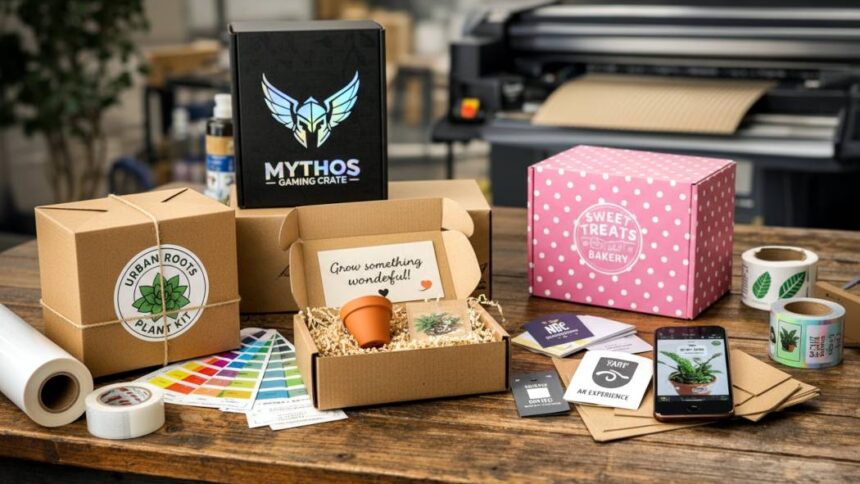

Not long ago, packaging served a purely protective function. Today, it is one of the first touchpoints between a customer and a brand, and increasingly it determines whether a product will be remembered, shared on social media, or reordered. In a world of intense competition, the customization of corrugated cardboard packaging is no longer an add-on — it is becoming a deliberately used marketing tool.
A well-designed package not only protects its contents but also communicates brand values, builds emotions, and enhances the shopping experience from the very moment the parcel is opened.
Corrugated cardboard as a carrier of brand communication
Corrugated cardboard offers enormous design possibilities. Its surface can function as a billboard, a leaflet, or even a storytelling medium. It is on the packaging that a brand has the opportunity to say something more than just “what’s inside.”
Color schemes, graphics, slogans, and even content layout all influence how a product is perceived and positioned. Minimalist printing can emphasize a premium character, while dynamic graphics convey energy and modernity. One thing is essential: consistency with the brand’s visual identity and authenticity of the message.
Printing technologies that enable customization
Flexographic printing — efficiency at scale
Flexography has long remained the core printing technology for corrugated cardboard. Modern machines allow full CMYK printing as well as the use of Pantone colors, while maintaining high production efficiency. This solution is ideal for medium and large runs, where consistency, durability, and a favorable unit cost matter most.
Additional protective varnishes increase resistance to abrasion and moisture, which is particularly important in logistics and e-commerce.
Digital printing — flexibility and variable content
The development of digital printing has completely changed the approach to packaging customization. This technology works perfectly for short runs, seasonal campaigns, market tests, and projects requiring frequent graphic changes.
Digital printing enables the use of variable elements such as:
- individual graphics,
- serial numbers,
- personalized messages,
- QR codes linking to online content.
It is an ideal tool for brands that want to react quickly and communicate more directly with customers.

Branding that works at the unboxing stage
The moment of opening a package is becoming an increasingly important part of the shopping experience. This is when the customer truly “meets” the brand for the first time.
Packaging can:
- strengthen logo recognition,
- reinforce a distinctive color scheme,
- tell the brand’s story,
- communicate its values and mission.
More and more often, the inside of the packaging is also printed — with a thank-you note, a motivational slogan, or a short brand story. Such details build an emotional bond and increase the likelihood of repeat contact with the brand.
Finishing and sensory experiences
Customization is not just about printing. Modern packaging increasingly engages more than one sense.
Popular solutions include:
- spot varnishing,
- embossing and debossing,
- soft-touch effects,
- special varnishes, including scented ones.
Thanks to these elements, packaging becomes an experience rather than just an object. The customer remembers not only the product, but also how it was presented.
Integrating the physical and digital worlds
Corrugated cardboard packaging can serve as a gateway to a brand’s digital world. Dynamic QR codes, NFC solutions, or augmented reality elements allow customers to access:
- promotional campaigns,
- product videos,
- contests and games,
- personalized offers.
This approach fits perfectly into an omnichannel strategy and enables the measurement of user engagement.
The economics of customization — cost or investment
Packaging customization requires cost analysis: printing technology, volume, graphic design, or logistics. However, a well-planned strategy quickly shows that this is not an expense, but an investment.
The benefits include:
- greater brand recognition,
- higher perceived product value,
- a better customer experience,
- increased loyalty and repeat purchases.
In the long term, personalized packaging works for the brand with every single shipment.
The future direction of packaging customization
The future of customization lies in automation, real-time personalization, and an even stronger focus on sustainable solutions. The importance of water-based inks, recycled materials, and packaging design aligned with the principles of the circular economy is growing.
Brands that invest today in a modern approach to packaging gain an advantage that is difficult to replicate.
Packaging as a fully-fledged brand medium
The customization of corrugated cardboard packaging is no longer a trend — it has become a standard of modern marketing communication. Properly designed packaging combines protective, aesthetic, and brand-building functions, creating a coherent brand experience.
It is one of the few marketing tools that goes directly into the customer’s hands. That is why it is worth ensuring that it says exactly what the brand wants to say.


